Thermal management
Air conditioning and engine cooling
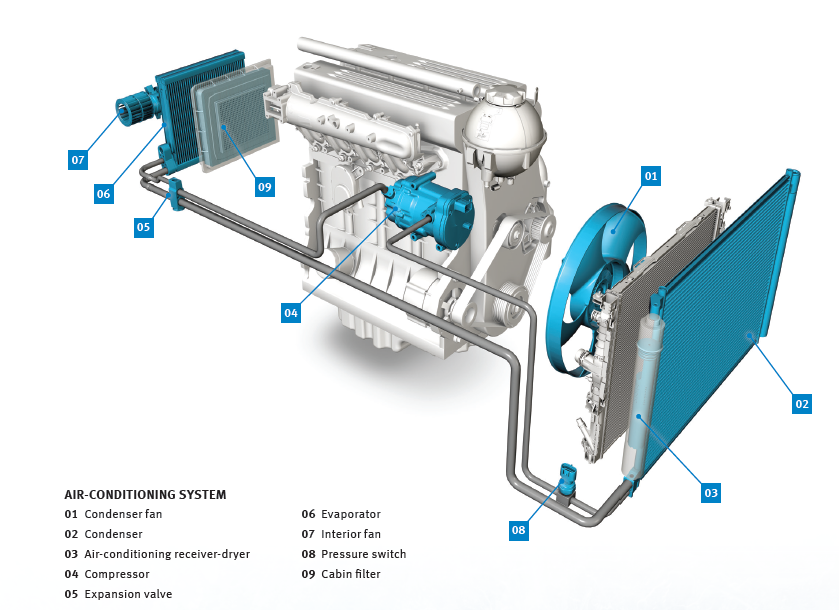
Air conditioning from Pierburg
Air-conditioning management controls the vehicle interior temperature and air distribution, thereby ensuring maximum comfort. Intelligent systems not only cool the passenger compartment, but also actively control the temperature of the high-voltage batteries and drive trains to maintain performance and range.
The components cover both combustion vehicles and hybrid and high-voltage vehicles.
Air-conditioning compressors
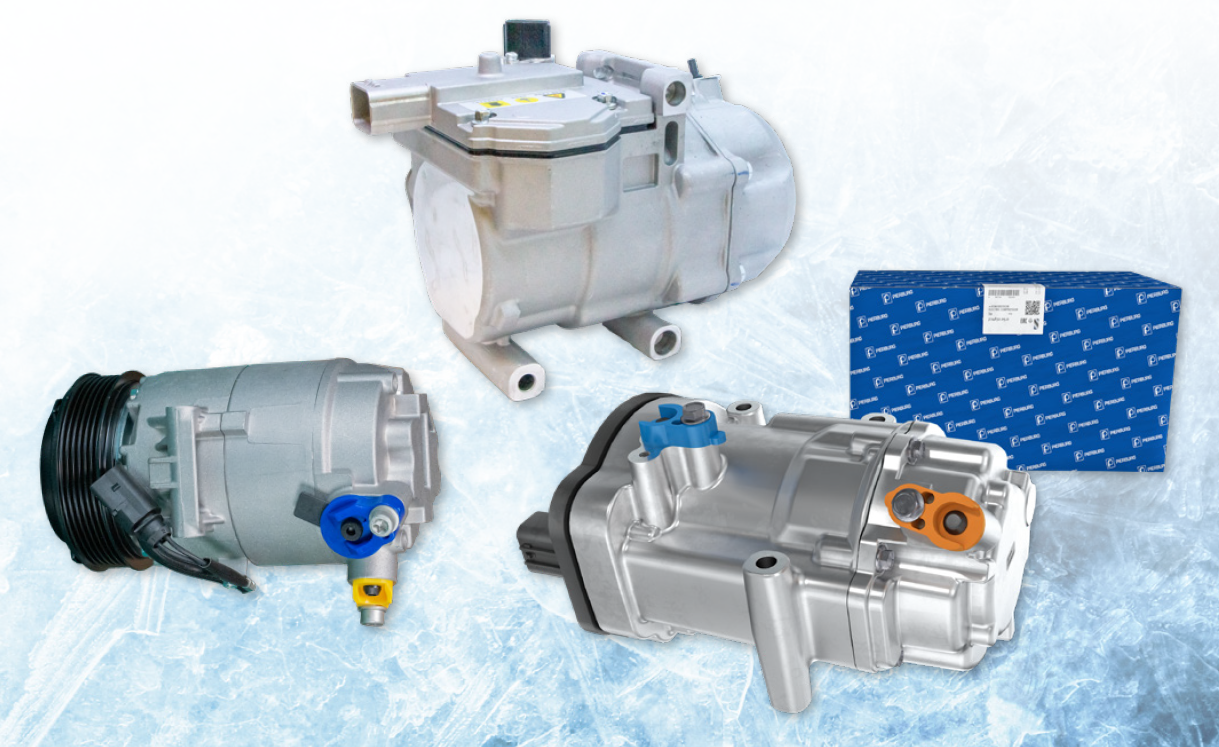
Air-conditioning compressors are an essential part of air-conditioning systems. Motorservice has both belt-driven and electrical air-conditioning compressors in its product range.
In petrol-driven and diesel vehicles, belt-driven air-conditioning compressors are driven by the combustion engine and only work when the engine is running. Motorservice offers more than 20 belt-driven air conditioning compressors and a large number of electrical air-conditioning compressors in OE quality for over 40 million passenger cars from European vehicle manufacturers.
In contrast to air-conditioning compressors in vehicles with conventional combustion engines, the electrical air-conditioning compressor for hybrid and electric vehicles is equipped with its own electric motor. This is why electrical air-conditioning compressors work even when the engine is switched off. The refrigerant approved by the OE must be used for the air-conditioning compressor.
When replacing the electrical air-conditioning compressor, the system must be flushed. In addition, all non-flushable parts must be replaced, including the expansion valve, the air-conditioning receiver-dryer and the seals. Otherwise, impurities may remain in the system which damage the new air-conditioning compressor.
Pressure switches
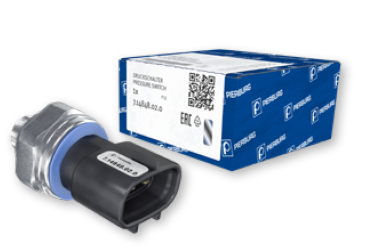
With the pressure switches from Pierburg, Motorservice covers a fleet of more than 200 million vehicles worldwide, including many hybrid and electric vehicles. They are approved for applications with R134a and R1234yf refrigerants.
The refrigerant circuit in air-conditioning systems is divided into a high-pressure and low-pressure side in vehicles. Generally, two pressure switches are installed in the vehicles: one for the high-pressure side and one for the low-pressure side. Alternatively, there is, for example, a combined pressure switch for both sides.
The pressure switches monitor the pressure in the air-conditioning system. If an excessively high or excessively low pressure is detected, they switch off the air-conditioning compressor to prevent damage to the system.
Expansion valves
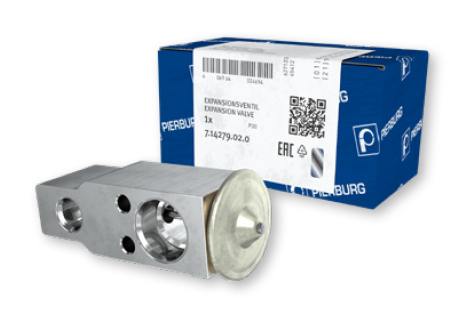
The expansion valve is an important component of air-conditioning systems and, together with the air-conditioning compressor, separates the high-pressure side from the low-pressure side. The expansion valve reduces the pressure from the high-pressure side to a constant pressure of approx. 2.5 bar. As the expansion valve is located directly at the evaporator, the refrigerant expands into the evaporator and becomes gaseous. It absorbs heat which is dissipated to the inside of the vehicle via the interior fan.
An important reason for replacing an expansion valve is that all non-flushable parts should also be replaced when replacing an air-conditioning compressor to remove impurities from the refrigerant circuit – and therefore so should the expansion valve. With the new expansion valves in OEM quality, replacements can be carried out in over 46 million vehicles worldwide.
Air-conditioning receiver-dryers
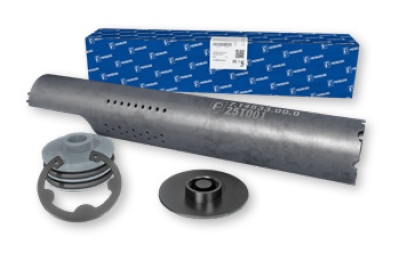
Air-conditioning receiver-dryers from Pierburg impress with high-quality filter media and meet all OE specifications. High quality is extremely important, as this is the only way to guarantee reliable refrigerant filtering. The air-conditioning receiver-dryer should therefore be replaced regularly. It removes impurities and moisture from the entire refrigerant circuit, which would otherwise lead to corrosion and other damage.
A service kit consisting of air-conditioning receiver-dryer and accessories (item no. 7.14833.00.0, OE ref. no. 1597579-A0-A) for the Tesla refrigerant circuit – for over 3.7 million vehicles from the electric vehicle manufacturer worldwide – has been launched.
Condensers
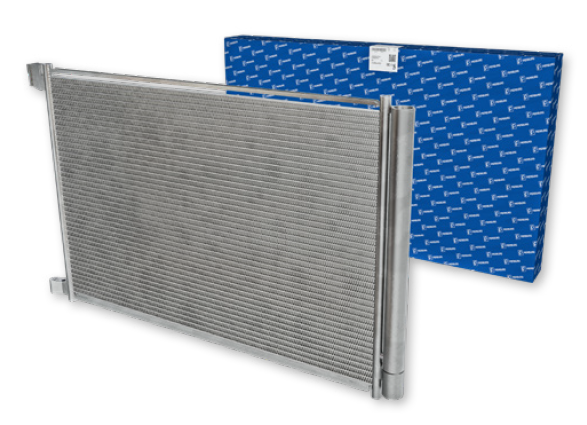
With over 20 air-conditioning condensers from Pierburg, Motorservice currently offers reliable quality for over 20 million vehicles from BMW, Mercedes-Benz, Land Rover and others. This includes vehicles with combustion technology as well as high-voltage vehicles.
An air-conditioning condenser must be replaced if the functionality of the air-conditioning system is significantly restricted. Stone chips in particular can damage condensers. If such damage is clearly visible, replacement may be appropriate.
Condensers are essential components of the refrigerant circuit. The air-conditioning compressor first draws in the evaporated refrigerant and compresses it, which causes it to heat up. The compressed and hot refrigerant is conveyed under high pressure to the condenser and condenser fan. There, the heat is drawn from the refrigerant so that it condenses into a liquid. The condenser emits the heat to the cooling agent, the external air flowing through it.
Evaporators
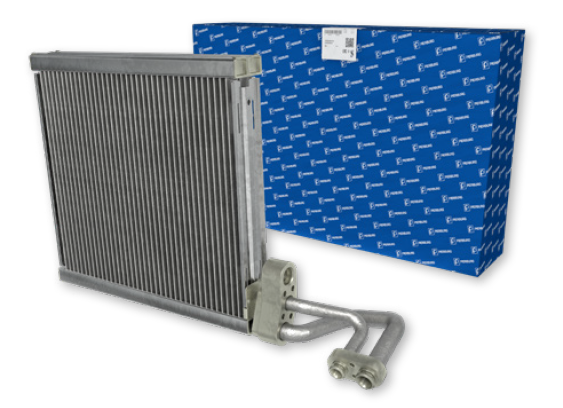
In many vehicles, air-conditioning systems are part of the series equipment. Motorservice has added another component for the refrigerant circuit to its range – 7 evaporators for 10 million vehicles worldwide.
The refrigerant expands directly into the evaporator through the expansion valve, which is responsible for a continuous pressure. There, it expands and enters a gaseous state. During this process, the refrigerant absorbs heat from the ambient air. The resulting cold is conveyed into the vehicle interior.
Besides non-functional evaporators, however, there is another reason for replacement: microbial contamination. Due to condensed and non-draining water, microbes, viruses and bacteria may settle on the evaporator in the humid environment. If disinfection no longer helps, the evaporator must be replaced; otherwise there is a health risk.
Engine cooling from Pierburg
The water pump is the central component of the coolant circuit and is essential for smooth operation of the engine. Mechanical water pumps are a well-established solution. By contrast, electrically powered coolant pumps ensure demand-based cooling of the engine. They reduce the power required and lower friction losses, fuel consumption and pollutant emissions. Pierburg production sites produce over 7 million mechanical and electrical water pumps for motor vehicles and utility vehicles every year.
With its innovative portfolio, Motorservice also offers water pumps from Pierburg for applications in motor vehicles and utility vehicles, as well as oil pumps and oil coolers. In this segment, the spare parts expert is a full-service provider, meaning that customers receive everything from a single source – in premium quality.
Motorservice has also expanded its product range in the field of engine cooling to include radiators and expansion tanks.
Expansion tanks
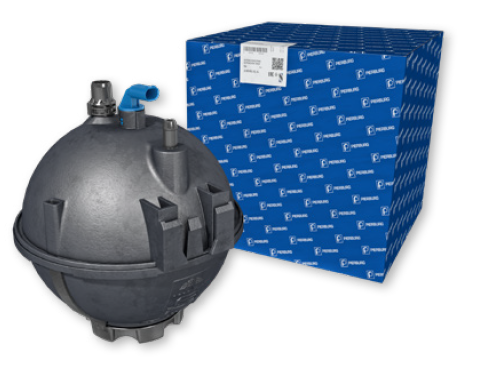
The expansion tank is a central component of the cooling system. It forms part of the pressure and volume management of modern engine cooling systems and is equipped with a pressure relief valve. It absorbs the thermal expansion of the coolant agent, stabilises the system pressure in the event of excess pressure or vacuum and ensures optimum filling of the entire circuit. Its position at the highest point of the cooling system enables continuous self-ventilation, reduces cavitation and protects pumps, seals and heat exchangers against overstressing.
The tank, which is made of temperature-resistant materials, combines maximum dimensional stability with low weight. Integrated pressure relief valves with precise opening pressures of 1.0 to 1.5 bar increase the boiling point of the coolant agent. Some versions have an integrated level sensor, optimised flow guidance and suitable connections. Expansion tanks from Pierburg are supplied as a complete repair solution.
Radiators
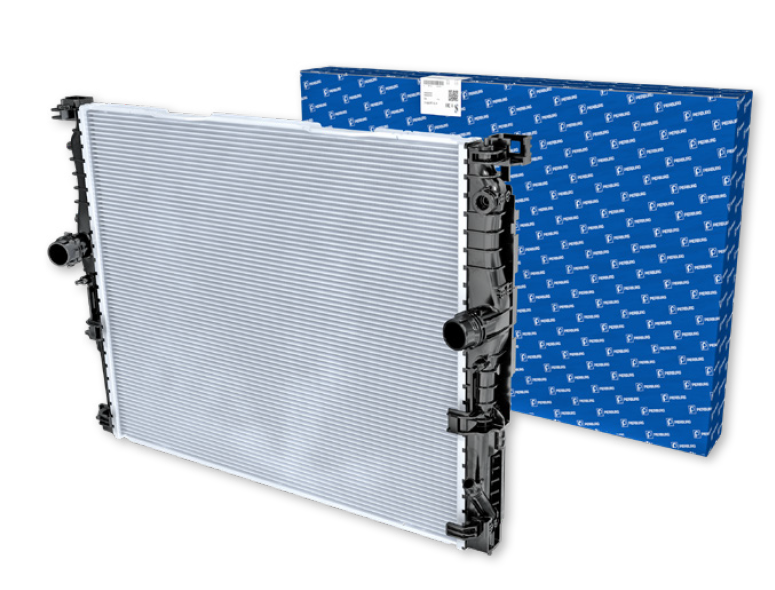
Radiators are often referred to as coolers. With 46 new radiators, Motorservice currently covers vehicles from BMW, Mercedes-Benz, Land Rover, Jaguar, Volvo and Porsche.
Pierburg products in OE quality are an important component of engine cooling, as they dissipate the heat from the engine and prevent overheating. Friction and combustion cause enormous heat in the engine. Part of this heat is absorbed by the coolant agent. The water pump, also known as the coolant pump, transports the hot coolant agent to the radiator. In most cases, this is located at the front of the car. The coolant agent flows through the fine channels of the radiator. At the same time, the head wind flows through the radiator and dissipates the heat. In most cases, the radiator is supported by a fan to ensure optimum cooling.
In the event of leaks in the radiator, replacement is essential to prevent overheating and thus permanent damage to the engine and other components. It is important to use a suitable antifreeze as otherwise the fine channels of the radiator may burst in the event of frost. The antifreeze also contributes to corrosion protection.
Mechanical and electrical water pumps
Demand-based cooling
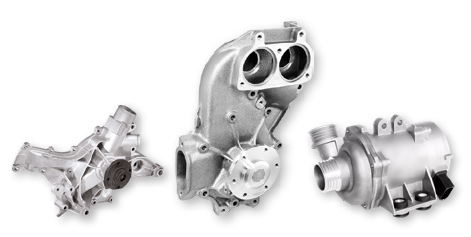
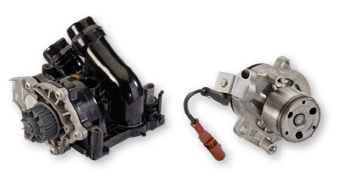
The cooling liquid of the water pump absorbs the heat from the engine block and cylinder head and releases it into the ambient air through the radiator. Depending on their design, mechanical water pumps are located either externally on the engine in their own pump housing or are flanged directly on the engine housing
and are driven by a V-belt, a toothed belt or directly by the engine.
Electrical water pumps make a significant contribution to emission control in modern engine designs. A delivery rate that is not dependent on the engine speed enables demand-based cooling. This reduces the power requirements whilst also cutting down on frictional loss, fuel consumption and pollutant emissions.
Variable mechanical water pumps
For modern thermal management
With its variable mechanical water pumps, Motorservice offers another innovative state-of-the-art and modern thermal management product in the aftermarket sector. The pumps are used to comply with current and future emissions standards. Regulated and demand-based cooling saves fuel and thus reduces CO2 emissions.
The options for regulating the volumetric flow include electromagnetic clutches, thermostat modules with thermostat valve, electronically actuated rotary slide valves with worm gear, covering the impeller with an electrohydraulically or pneumatically adjustable ring, and pneumatic bypass flaps inside the pump module. As a result, the pumps are in line with the current trend towards smart accessories in combustion engines.
Water circulating pumps
Flexible, independent helpers with high temperature resistance
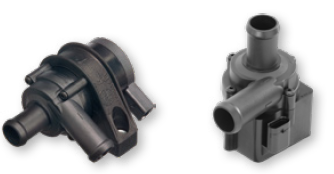
Pierburg water circulating pumps are characterised by a low weight and high media and temperature resistance. They are used where cooling or heating functions have to be carried out independently from the engine speed, e.g. for auxiliary heating or cooling turbochargers.
Oil pumps
Perfected oil supply
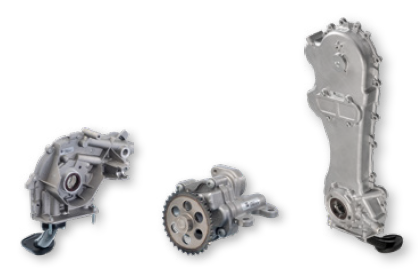
Pierburg develops and supplies oil pumps to all leading engine manufacturers and owns numerous patents. Building on this know-how, Motorservice offers pumps for a multitude of passenger car and truck applications.
Oil coolers
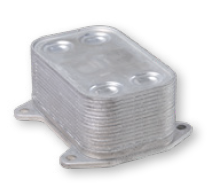
In most engines, oil coolers are used to selectively reduce the oil temperature. Due to the temperature output to the engine's coolant circuit, the oil temperature can be reduced by up to 30°C. As oil coolers are difficult to clean, Motorservice recommends always replacing this component.