Basic knowledge about water pumps
Water pumps are a central component in vehicles’ cooling systems. They ensure that coolant agent or cooling liquid circulate in the coolant circuit and dissipate the heat from the engine block and the cylinder head. This prevents overheating and engine damage. While mechanical pumps are dependent on the engine speed, modern electric variants regulate the delivery rate as required. A pump defect quickly leads to insufficient circulation and usually requires it to be replaced, as a repaired pump is often less reliable.
This article conveys basic information about how exactly coolant pumps work and explains the differences between mechanical and electrical water pumps. A technical video complements the content.
The engine cooling system
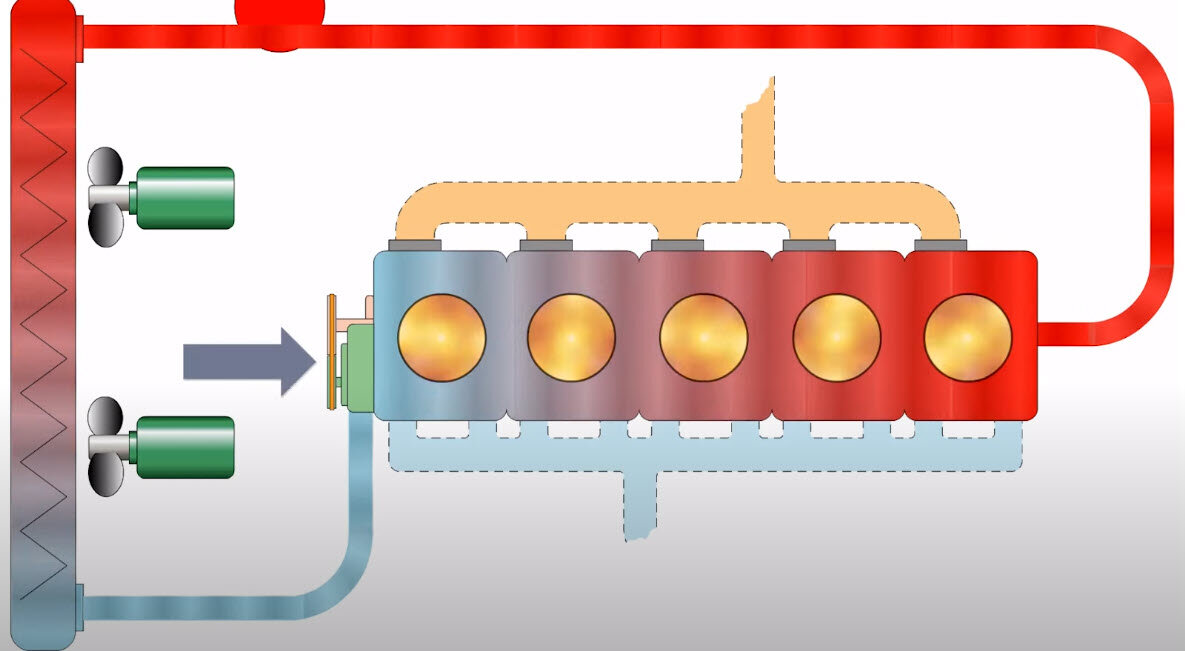
High temperatures occur in the engine during combustion. To prevent the engine being damaged by overheating, it needs to be cooled. One option for doing this is air cooling. However, most engines are water-cooled. The cooling liquid absorbs the heat from the engine block and cylinder head and releases it into the ambient air through the radiator. The water pump – also known as the coolant pump – is responsible for conveying this liquid.
Types of water pumps
Mechanical water pumps are driven directly by the engine. The power consumption of the water pump thereby increases in line with the engine speed. But even during idling, sufficient engine cooling must also be guaranteed for all operating states. Conventional water pumps are therefore oversized for most operating states.
On electrical water pumps, the power consumption can be controlled electronically depending on the extent to which the engine needs to be cooled. This demand-based control ensures lower fuel consumption and therefore lower pollutant emissions thanks to the optimum operating temperature being reached faster and held.
Video - Water pumps/ coolant pumps - basic information
We need your consent to load the YouTube service!
In order to play YouTube videos, a connection to YouTube must be established. This will also entail data processing and cookie usage by YouTube/Google (possibly also out of the USA). By clicking "Accept", you consent to this data processing and the placing of YouTube cookies on your terminal device. Your selection will be saved for future visits to this website. You may find further information under "More" and in our Data Protection Information.
Tags
Product groups


This might also interest you
