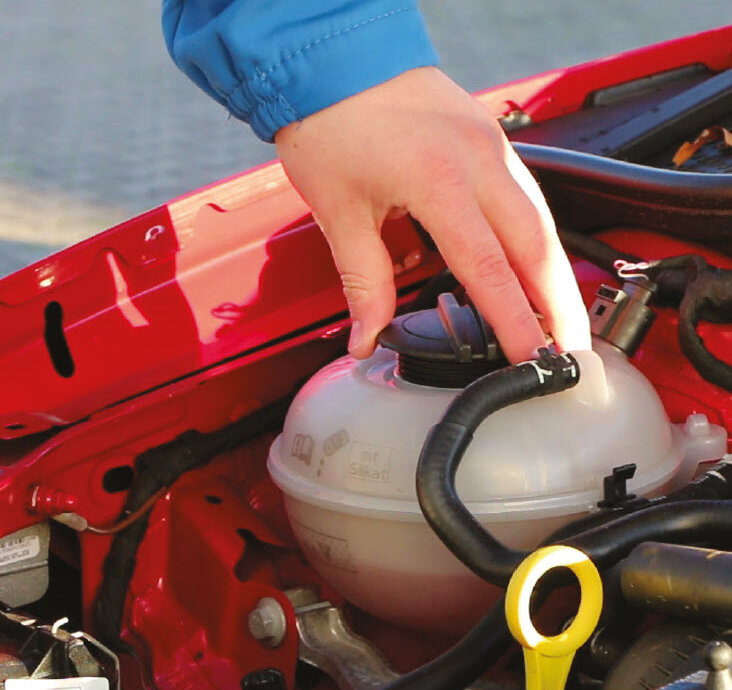
Bleeding the cooling system
The manufacturer's specifications must be observed
After replacing the water pump or other operations on the cooling system, the system must be fully bled. It should be noted that air pockets can occur when opening the system, which hinder the circulation of the cooling water. If the system is not bled according to the specifications of the vehicle manufacturer, air can build up in all of these branches and components. These accumulations can disrupt heat transfer and negatively affect critical components such as the heat exchanger, valve or thermostat.
Technical information
Modern vehicles have complex coolant circuits with multiple branches, which are operated by electric or mechanical pumps depending on the operating state. If the cooling system is not properly filled and bled, problems such as overheating, uneven temperature distribution or damage to the cylinder head gasket may occur. Electronic components that can be damaged by local heat buildup are particularly at risk.
When this happens, the risk is not only that the water pumps could run dry. Air bubbles in the system can also impair heat transfer. This can cause heat to build up in some areas (hotspots), which could, for example, directly damage the circuit board of an electrical coolant pump or cause the electronic components to age prematurely.
A system that is not bled can be affected by symptoms such as fluctuating engine temperature, failure of the heating system or abnormal pressure in the receptacle. Even the fill level in the expansion tank can be distorted, which can lead to incorrect filling with coolant agent or cooling liquid. In some cases, the radiator may overheat even though the lid of the receptacle is still closed.
Measures for bleeding
Bleeding is usually done via bleed screws and requires the liquid to be filled slowly up to the marking. While doing so, the heater should be activated so that there is a flow through all circuits. After driving, we recommend checking the fill level and, if necessary, adding water or coolant agent. The hose between the radiator and the expansion tank must be free of blockages to ensure stable circulation.
Compliance with the manufacturer's instructions for bleeding is not only relevant for repairs such as replacing the water pump, but for all work where the cooling system is opened. Incorrect bleeding can lead to expensive damage to the cylinder head and other sensitive components in the long-term. Precise instructions for carrying out bleeding are therefore essential.
Tags
Product groups
This might also interest you
